

Excellent
 reviews on
 Trustpilot
Free Delivery Minimum Spend €250
7 Days Support
18 Month's Warranty

- Aaliya Yousaf
- 02 Jul, 2026
Xiaomi has a habit of releasing so many Redmi phones that picking one feels less like shopping and more like solving a puzzle. The Redmi A7 Pro, Redmi 15C, Redmi Note 15 Pro, and Redmi Note 15 Pro+ all sit under the same Redmi name, but they're aimed at completely different people and completely different budgets. One is built to be the cheapest phone that still feels usable, and the other is genuinely creeping up on flagship territory.
Rather than just listing spec sheets at you, we're going to walk through what each phone is actually like to live with, who it makes sense for, and where the real differences show up day to day.
The Quick Comparison
| Spec | Redmi A7 Pro | Redmi 15C | Redmi Note 15 Pro | Redmi Note 15 Pro+ |
|---|---|---|---|---|
| Display | 6.9" IPS, 120Hz | 6.9" IPS, 120Hz | 6.83" AMOLED, 120Hz | 6.83" AMOLED, 120Hz |
| Chipset | Unisoc T7250 / T8300 | Helio G81 Ultra / Dimensity 6300 | Dimensity 7400 Ultra | Snapdragon 7s Gen 4 |
| RAM | 4GB / 6GB | 4GB / 6GB / 8GB | 8GB / 12GB | 8GB / 12GB |
| Storage | 64GB / 128GB | 128GB / 256GB | 256GB / 512GB | 256GB / 512GB |
| Main Camera | 13MP (4G) / 32MP (5G) | 50MP | 200MP | 200MP |
| Battery | 6000mAh / 6300mAh | 6000mAh | ~6500mAh, 45W | ~6500mAh, 100W |
| Water Resistance | IP52 | IP64 | IP65 | IP68 / IP69K |
| OS Support | 4 years OS, 6 years security | Standard Xiaomi update cycle | Multi-year updates | Multi-year updates |
Already, you can see the shape of this lineup: it's not four versions of the same phone; it's four genuinely different tiers stacked on top of each other.

Redmi A7 Pro: The "Just Make It Work" Phone
The A7 Pro is Xiaomi's entry point, and it's honest about what it is. You're getting a 6.9-inch IPS display that actually runs at 120Hz, which is a nice surprise at this price, paired with either a Unisoc T7250 (the 4G version) or a Unisoc T8300 (the 5G version). Neither chip is going to impress anyone, but that's not really the point here.
What stands out is the battery situation. The 4G model carries a 6000mAh battery, while the 5G version bumps that to 6300mAh, and both are built to comfortably get you through a full day of calls, messaging, and casual scrolling without you thinking about the charger much. Charging itself is modest, 15W on the 4G model, so don't expect quick top-ups.
The camera setup is basic by design, a 13MP dual camera on the 4G version or a 32MP dual AI camera on the 5G model, plus an 8MP selfie camera. Don't go in expecting standout photos. What's genuinely worth knowing, though, is the software promise: Xiaomi is backing the A7 Pro with four years of OS updates and six years of security updates, which is an unusually long commitment for a phone in this price bracket.
the A7 Pro makes the most sense as a first phone, a backup device, or something you hand to a parent or a child who mainly needs calls, messages, and basic apps. If your phone usage is light and the price tag is the deciding factor, this covers the basics and then some, especially with that update promise backing it up.

Redmi 15C: A Step Up Without a Big Price Jump
The Redmi 15C sits just above the A7 Pro, and the difference is noticeable the moment you start using it. You still get a 6.9-inch IPS panel at 120Hz, but the chip underneath is a genuine upgrade, either a MediaTek Helio G81 Ultra on the 4G version or a Dimensity 6300 on the 5G model. Both handle everyday multitasking, social apps, and casual gaming with a lot less hesitation than the A7 Pro.
Battery capacity stays at 6000mAh, but charging jumps to 33W, which actually matters in daily use, fewer minutes plugged in for a meaningful chunk of battery back. The IP64 rating also means it can shrug off splashes and light rain, something the A7 Pro can't really claim with its IP52 rating.
if you want noticeably better day-to-day performance than the absolute entry-level option, but you're still not ready to spend mid-range money, the 15C is the obvious step. It suits students, casual gamers, and anyone who wants a phone that won't feel sluggish after the first few months of use.

Redmi Note 15 Pro: Where Things Start Feeling Premium
This is where the lineup changes character. The Redmi Note 15 Pro swaps the IPS panel for a 6.83-inch AMOLED display at 120Hz, and the difference in color and contrast is immediately obvious. Add in a MediaTek Dimensity 7400 Ultra chip, and you've got a phone that handles modern apps, multitasking, and reasonably demanding games without any of the strain you'd feel on the cheaper two models.
The camera is the real headline here, a 200MP main sensor with a large 1/1.4-inch sensor size, paired with processing that lets it shoot from multiple focal lengths convincingly. Battery life benefits from a roughly 6500mAh cell with 45W charging, and Xiaomi has reinforced the build with Gorilla Glass Victus 2 and an IP65 rating, so it's noticeably tougher than the two budget models too.
The Note 15 Pro suits anyone who wants their phone to genuinely feel current, with a sharp display, solid camera, and dependable performance, without paying for every last premium feature. It's a strong choice if you take photos seriously, stream a lot of video, or just want a phone that'll still feel quick a couple of years from now.
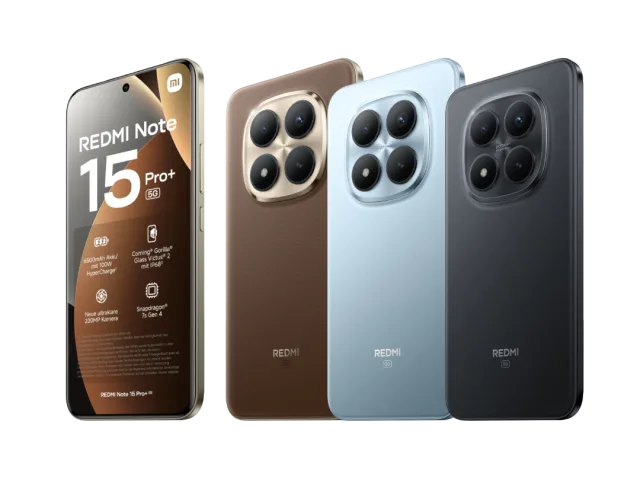
Redmi Note 15 Pro+: The Closest Thing to a Flagship in This Lineup
The Pro+ takes everything good about the Note 15 Pro and pushes it further. The same 6.83-inch AMOLED display is here, but Xiaomi swaps in a Snapdragon 7s Gen 4 chip, which edges out the Dimensity 7400 Ultra in raw performance and is particularly good in games. Charging speed is where the real gap opens up: 100W fast charging compared to the standard Pro's 45W, meaning a full charge takes a fraction of the time.
Durability gets a serious boost too. The Pro+ is rated up to IP68/IP69K, which means it can handle far more than splashes; it's built to survive submersion and even high-pressure water exposure, backed by a reinforced fiberglass back panel. The 200MP main camera carries over from the standard Pro, so photo quality stays excellent, but everything around it, including charging, the chip, and durability, gets a genuine upgrade.
if you want the best possible experience in the Redmi lineup without actually stepping into Xiaomi's true flagship series, the Pro+ is it. It suits heavier users, gamers, and anyone who wants fast charging and serious durability alongside that excellent display and camera combination.
So, Which One Should You Actually Pick?
If your budget is the main constraint and your phone use is genuinely light—calls, texts, the occasional app—go with the A7 Pro and lean on that surprisingly long software support window. If you want noticeably smoother day-to-day performance without spending much more, the 15C is the easy upgrade.
Once you cross into the Note 15 Pro, you're getting a phone that competes seriously on camera quality and display, ideal if you want something that feels properly current. And if you want the most polished version of that experience, faster charging, a tougher build, and slightly better performance, the Pro+ is worth the stretch.
None of these phones are bad choices; they're just built for different people. The trick is being honest about which one you actually are.
If you're picking one of these up refurbished rather than brand new, it's worth buying from a retailer that actually tests and grades devices properly rather than just wiping and reselling them, since battery health and build condition matter just as much as the model you choose.
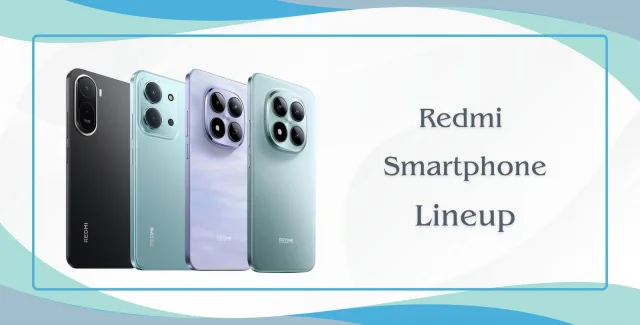
Find Your Perfect Redmi Phone at Fone4U
Whether you're looking for an affordable everyday phone, a capable mid-range device, or a near-flagship experience, Fone4U offers a wide selection of Xiaomi and Redmi smartphones backed by trusted Irish support, competitive pricing, and fast nationwide delivery.
Frequently Asked Questions
Tags
-
Fone 4 U
-
Fone4u
-
Xiaomi
-
Xiaomi Redmi
-
Which Redmi phone is best?
-
Is Redmi A7 Pro worth buying?
-
Is Redmi 15C better than Redmi A7 Pro?
-
Redmi Note 15 Pro or Pro Plus?
-
Which Redmi phone has the best battery?
-
Which Redmi phone has the best camera?
-
Which Redmi phone is best for gaming?
-
Which Redmi phone offers the best value?
-
Is Redmi Note 15 Pro Plus worth it?
-
What is the difference between Redmi Note 15 Pro and Pro+?
-
Redmi buying guide
-
Affordable Xiaomi phones
-
Xiaomi Redmi smartphones
-
Redmi phone buying guide
-
Redmi phone comparison 2026
-
Redmi phones for students
-
Best Xiaomi Redmi phone to buy
-
Redmi A7 Pro specifications
-
Redmi 15C specifications
-
Redmi Note 15 Pro specifications
-
Redmi Note 15 Pro Plus specifications
-
Best Redmi phone under budget
-
Redmi A7 Pro vs Redmi 15C which is better
-
Redmi Note 15 Pro vs Redmi Note 15 Pro Plus
-
Redmi Note 15 Pro vs Redmi Note 15 Pro Plus
-
Redmi A7 Pro review
-
Redmi 15C review
-
Redmi Note 15 Pro review
-
Redmi Note 15 Pro Plus review
-
Redmi A7 Pro 128GB
Categories
Visit us
We use essential cookies to run the shop. With your OK we’d also use analytics and show Google Maps & videos. Cookie policy