

 Trustpilot
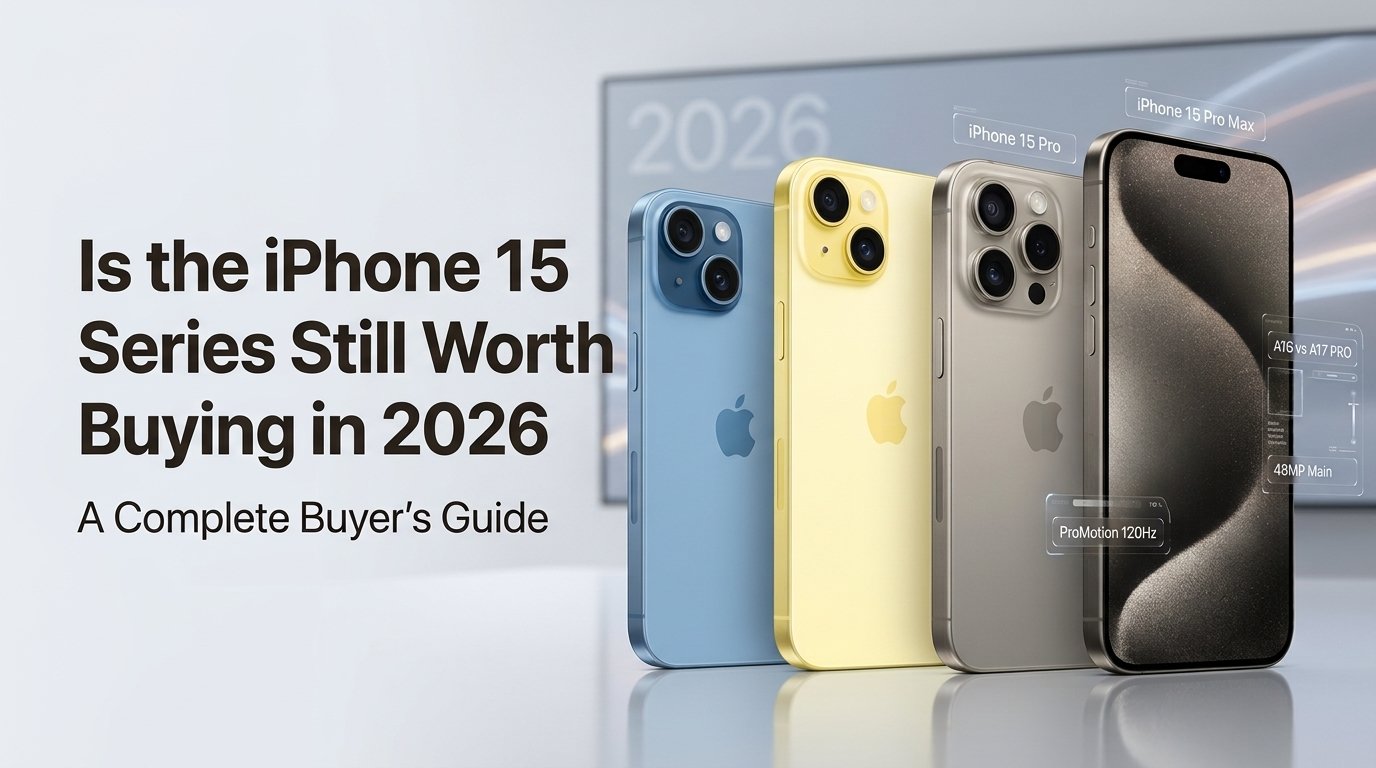
Is the iPhone 15 Series Still Worth Buying in 2026? A Complete Buyer’s Guide
Yes, for most buyers the iPhone 15 series is still a genuinely good purchase in 2026—but with one honest caveat. The standard iPhone 15 and iPhone 15 Plus don't support Apple Intelligence, so if AI features are a priority for you, you'll want the iPhone 15 Pro or Pro Max instead, or a newer model altogether. For everyday use, photography, and reliable day-to-day performance, though, all four models still hold up well and are now considerably cheaper than at launch.
Apple has discontinued the iPhone 15 series from its own store following the launch of the iPhone 18 lineup, which means today's buyers are almost exclusively shopping the used and refurbished market. That's not necessarily a downside—it's actually where the value now lies. We can dissect the strengths of each device, pinpoint the actual weaknesses, and understand who is a suitable candidate for purchasing the respective smartphone.
Why the iPhone 15 Series Remains Worth Considering in 2026
The iPhone 15 series was released in September 2023 and featured many important innovations: the transition from the proprietary Lightning connector to USB-C, Dynamic Island available in standard models (rather than in Pro models only), and the introduction of a 48MP main camera to the whole range.
Three years on, those upgrades haven't aged badly at all. USB-C means the iPhone 15 charges with the same cable as most laptops, tablets, and Android phones — a real convenience that older iPhones lacked. The 48MP camera still produces excellent, detailed photos that hold up well against newer models for everyday and social use. And software support remains current: the iPhone 15 series runs iOS, Apple's latest operating system, in full.
The honest limitation is Apple Intelligence, Apple's suite of on-device AI features. It requires an A17 Pro chip or newer, which means only the iPhone 15 Pro and iPhone 15 Pro Max in this lineup support it—the standard iPhone 15 and iPhone 15 Plus, powered by the A16 Bionic, do not. If AI writing tools, smarter Siri features, and on-device AI capabilities matter to you now or are likely to matter as Apple expands them, that's a real factor to weigh before buying a standard model.
Meet the Four iPhone 15 Models
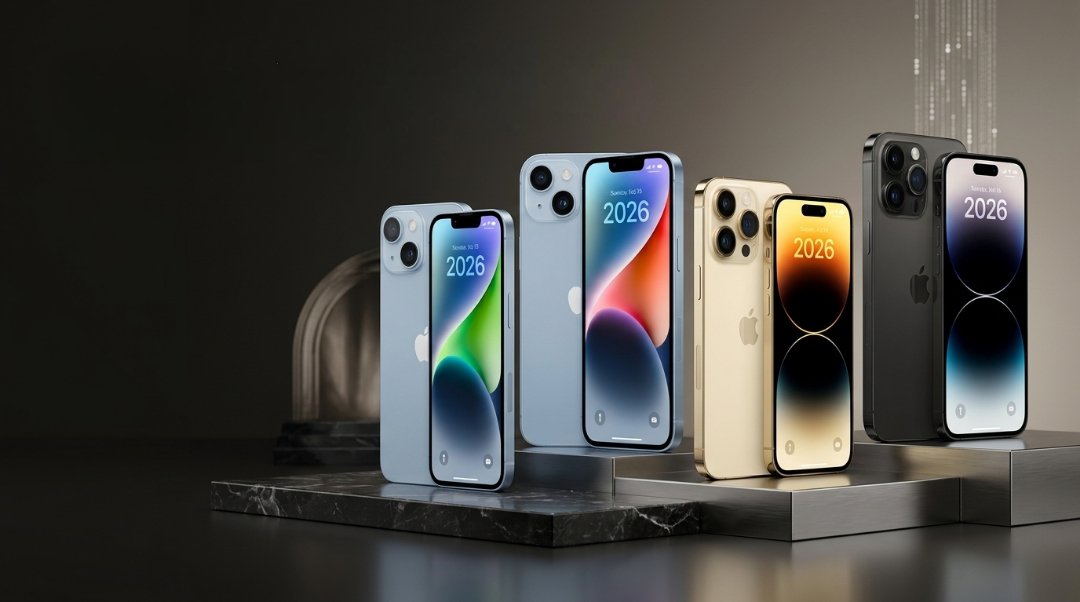
- iPhone 15—The standard 6.1-inch model, bringing Dynamic Island and the 48MP camera to the mainstream lineup for the first time.
- iPhone 15 Plus – Same core experience as the iPhone 15, on a larger 6.7-inch display with a bigger battery.
- iPhone 15 Pro – Introduces a titanium frame, the Action Button, ProMotion display, always-on screen, A17 Pro chip, and Apple Intelligence support.
- iPhone 15 Pro Max – The Pro experience on the largest display, with the series' most capable camera system, including 5x optical zoom.
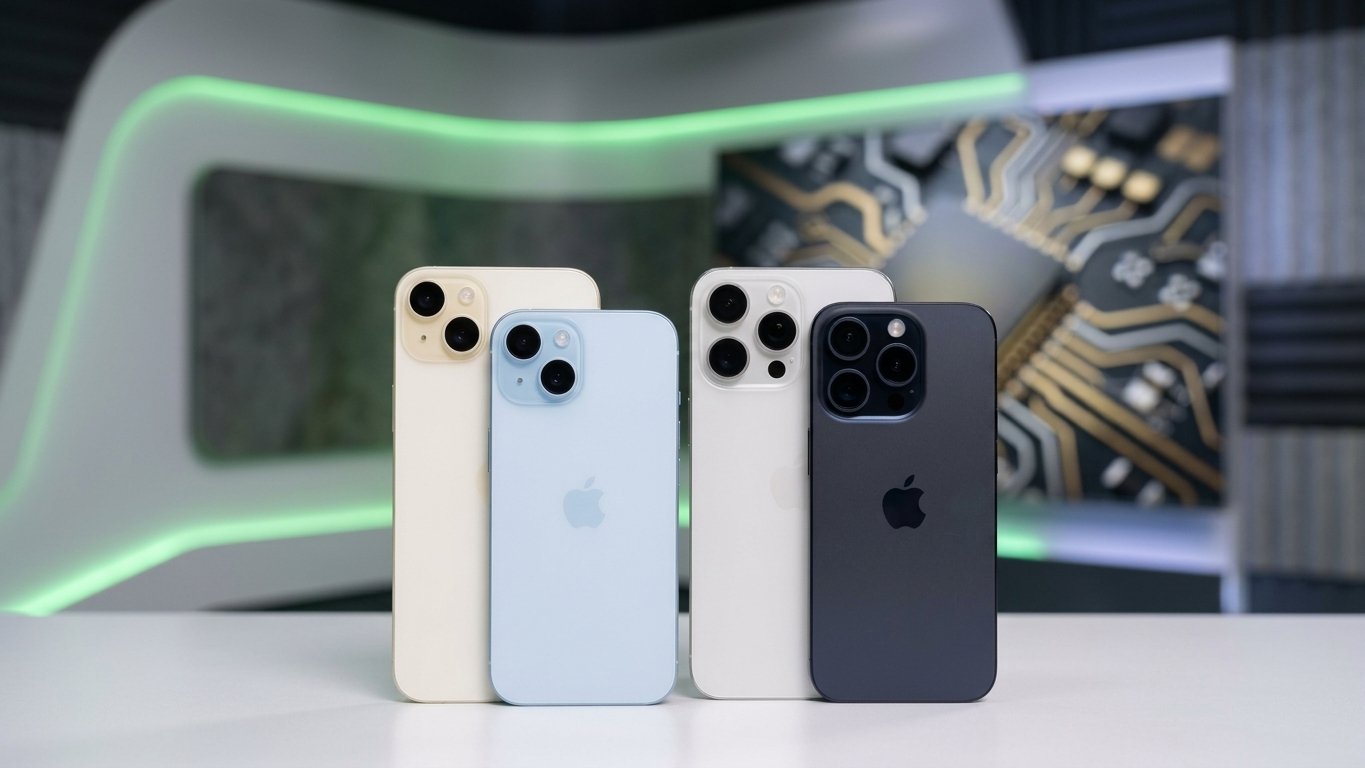
iPhone 15 Series Comparison Table
iPhone 15: A Solid, Affordable Entry Point
The standard iPhone 15 remains an easy phone to recommend for anyone who wants a modern iPhone experience without paying Pro-level prices. The Dynamic Island makes notifications and live activities genuinely more useful than the old notch design, and the jump to a 48MP main camera gives noticeably sharper, more detailed photos than the previous generation's 12MP sensor.
The A16 Bionic chip—carried over from the iPhone 14 Pro—is more than capable for messaging, browsing, streaming, and most games. This is the model best suited to students, first-time iPhone buyers, and anyone who wants dependable performance without needing the newest AI features.
iPhone 15 Plus: The Same Phone, Built Bigger
The iPhone 15 Plus offers exactly the same core experience as the standard iPhone 15, just stretched onto a 6.7-inch display with a larger battery to match. If you find yourself wanting more screen for video, reading, or general viewing comfort, the Plus delivers that without any changes to the camera system or chip.
Battery life is the clearest benefit here—the larger battery comfortably outlasts the standard model across a full day of typical use, making it a strong pick for people who are frequently away from a charger.
iPhone 15 Pro: The AI-Ready, Titanium Upgrade
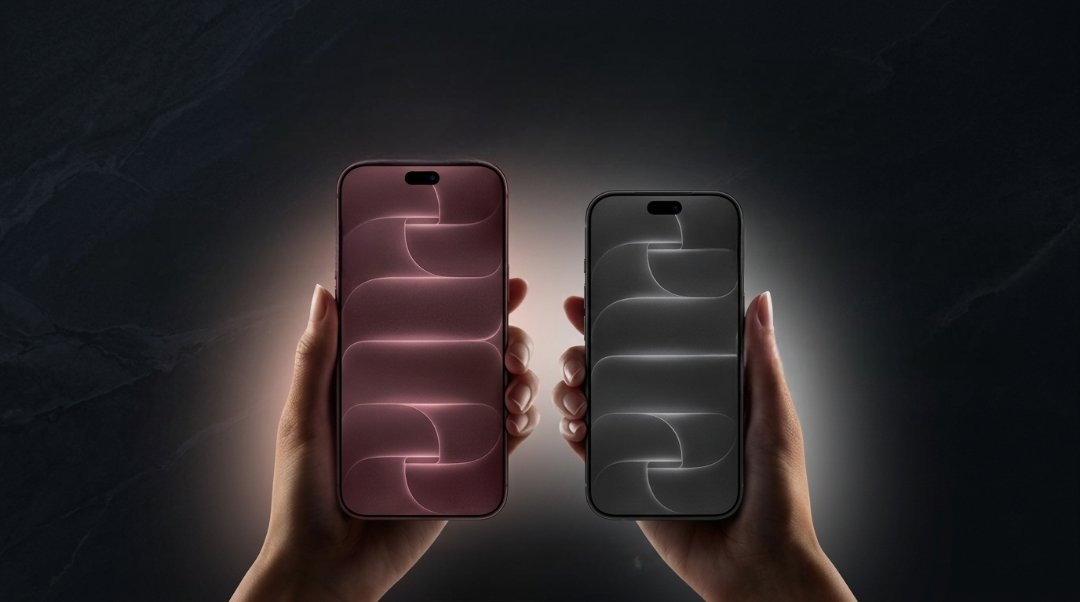
The iPhone 15 Pro is where the lineup's most meaningful upgrades live. Its titanium frame is lighter than the stainless steel used in previous Pro models, while still feeling premium and durable. The new Action Button replaces the old mute switch with a customizable shortcut for camera, flashlight, shortcuts, or other functions.
The A17 Pro chip is a genuine step up in both raw performance and efficiency, and it's the chip that unlocks Apple Intelligence on this generation. For anyone who wants access to Apple's AI features—or plans to keep their phone for several more years as those features expand—this is the model that keeps that door open in a way the standard iPhone 15 and 15 Plus simply can't.
The camera system adds a genuine 3x optical zoom telephoto lens, which makes a real difference for portraits, travel photography, and any shot where you can't physically get closer to the subject.
MAX
iPhone 15 Pro Max: The Best Zoom and Battery in the Series
The iPhone 15 Pro Max builds on the Pro with the series' most capable zoom—a 5x optical telephoto lens using a tetraprism design that was new to this generation—along with the largest battery and display. For photography enthusiasts, frequent travelers, or anyone who wants the most complete camera experience Apple offered at the time, this remains the standout model in the lineup.
Standard vs. Pro: The Honest Trade-Offs
It's worth being direct about what you're actually choosing between:
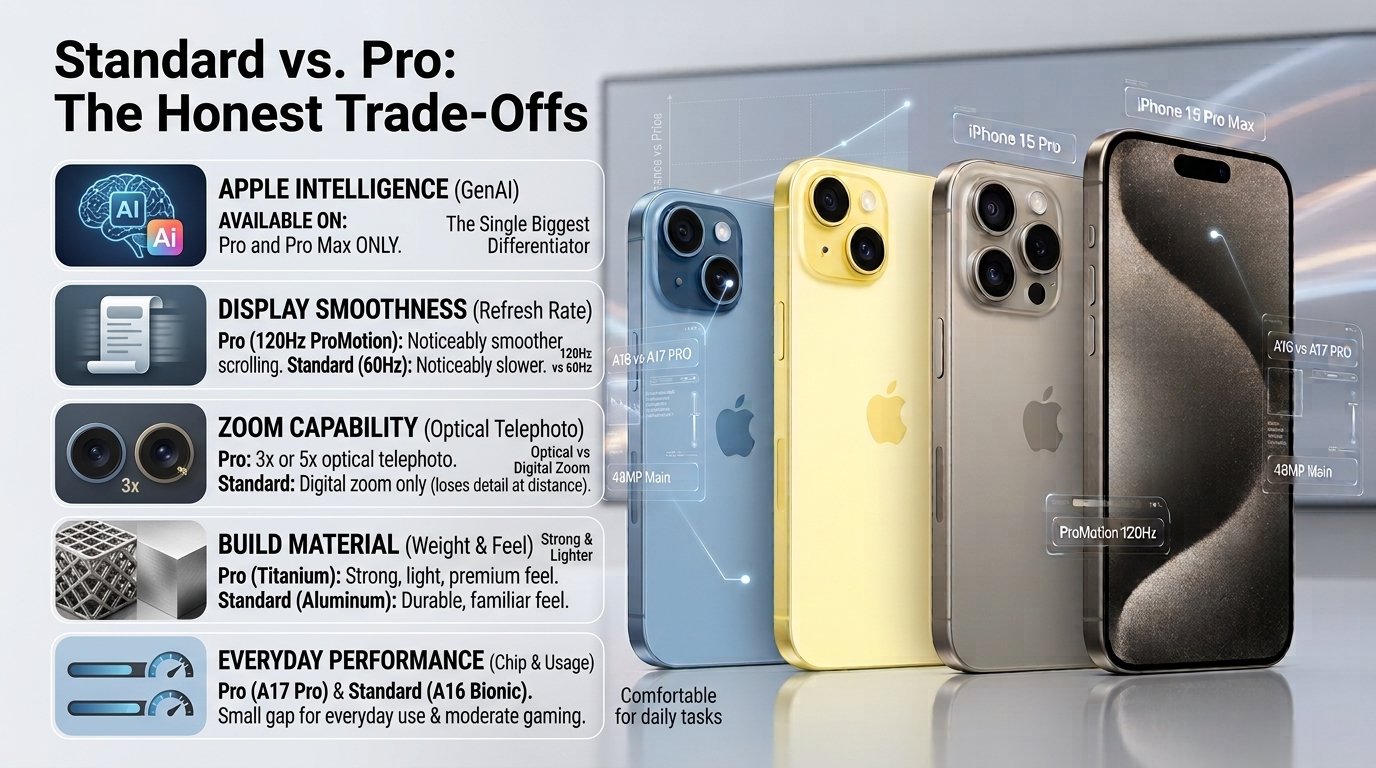
- Apple Intelligence—Only available on the Pro and Pro Max. This is the single biggest differentiator in this generation and worth thinking about even if AI features don't matter to you today.
- Display smoothness—The Pro models' 120Hz ProMotion display feels noticeably smoother when scrolling than the standard models' 60Hz panel.
- Zoom capability—Only the Pro models offer optical telephoto zoom at all; the standard models rely on digital zoom, which loses detail at longer distances.
- Build material—Titanium on the Pro models is lighter and more premium-feeling than the aluminum used on the standard models, though this is a smaller factor for most buyers than the two points above.
- Everyday performance—For typical daily use, the gap between the A16 Bionic and A17 Pro is small. Both handle everyday apps and moderate gaming comfortably.
Is Buying an iPhone 15 in 2026 Smarter Than Buying Newer?
Since Apple no longer sells the iPhone 15 series, today's buyers are choosing between it and newer models like the iPhone 16 or iPhone 17 series, almost always in the used or refurbished market. The honest comparison comes down to price versus features.
A newer iPhone will get more years of future software support and, depending on the model, better AI integration and camera hardware. But it will also cost noticeably more, even used. If the price difference between a refurbished iPhone 15 and a refurbished iPhone 16 is small, the newer phone is usually the better long-term buy. If the gap is significant and your priorities are everyday reliability rather than the newest AI features, the iPhone 15 series still represents strong value.
iPhone 15 Models That You Should Choose in 2026
Refurbished iPhone 15: Things to Know Before Buying
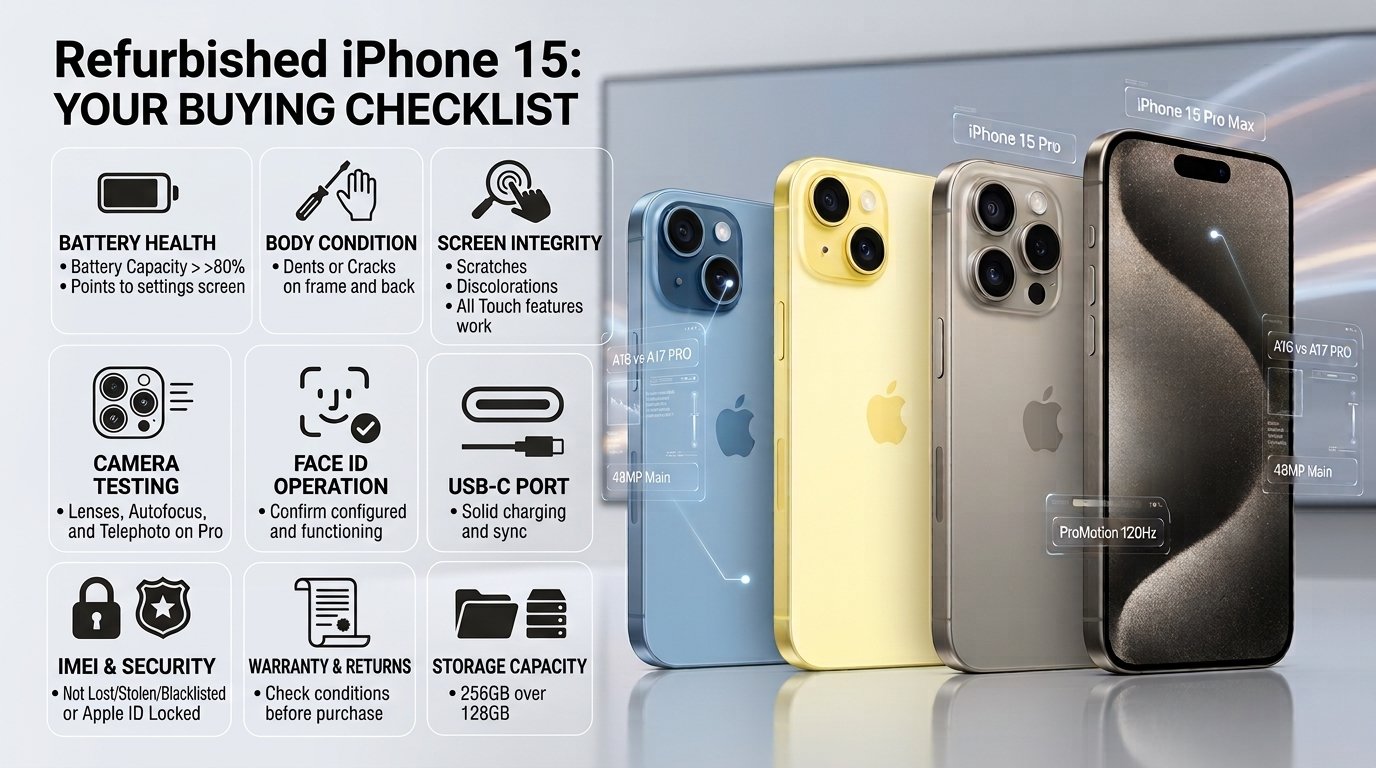
Battery performance:
The battery must have no less than 80% capacity in Settings to be usable on a daily basis.
State of the body: The frame, as well as the glass or titanium back (if it is Pro), should not have any dents or cracks.
State of the screen:
There should be no scratches or discolorations, and all touch features must work properly.
State of the camera:
Test all lenses and autofocus; in particular, make sure the telephoto lens works for the Pro version.
Face ID:
It should be configured and operated correctly.
State of USB-C port:
Make sure that charging and synchronizing do not result in a loose connection.
IMEI and phone specifications:
Ensure that the phone is neither lost nor stolen and not blacklisted nor locked to the Apple ID of someone else.
Warranty and returns:
Look through them before purchase.
Storage size:
It should have enough space in storage, and consider buying 256GB rather than 128GB.
Buying an iPhone 15 From Fone4u
With the iPhone 15 series now mainly available secondhand, where you buy from matters as much as which model you pick. Fone4u tests and grades its used and refurbished phones, giving you a clearer picture of condition and battery health than an unverified private sale typically offers.
Before buying, check Fone4u's current listing for the specific iPhone 15 model you're considering to confirm the grading, warranty length, and return policy attached to that particular device, since these details can vary between individual listings.
Final Thoughts
The honest answer is that the iPhone 15 series still earns its place in 2026—but which model makes sense depends heavily on whether Apple Intelligence matters to you. If it does, the iPhone 15 Pro or Pro Max is the only way to get it in this generation. If it doesn't, the standard iPhone 15 or 15 Plus offers dependable, modern performance at a price that's hard to beat on the used market. As always, buying from a seller who properly tests, grades, and stands behind their devices will do more for your long-term satisfaction than which exact model you pick.