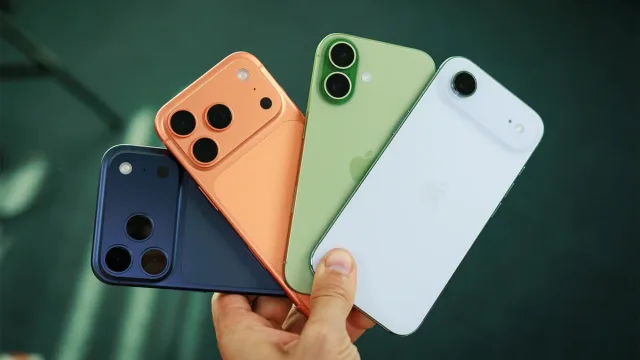
Apple's 2025 iPhone range takes a bold step in camera technology, pushing the bar for mobile photography on every model. From casual shot taker to content creator to power user, knowing how every iPhone 17 model shoots is the key to buying wisely. Here, we detail how the iPhone 17, iPhone 17 Air, iPhone 17 Pro, and iPhone 17 Pro Max cameras hold up in real life—and what to pick for your budget.
New Camera Architecture: What Apple Refers to as "Fusion Camera"
With the iPhone 17 lineup, Apple introduces the Fusion Camera system, which blends high-resolution sensors together with intelligent cropping and processing to both augment ability beyond what the physical lens can achieve on its own and reduce complexity.
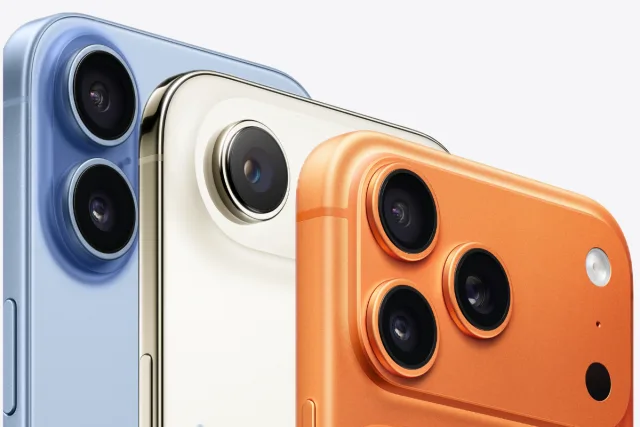
Highlights:
- All models now use 48MP sensors on the rear cameras, primary and ultra-wide (where available).
- Apple uses pixel binning/fusion modes (e.g., delivering 24MP) to improve photo quality in low light and reduce noise.
- "Fusion zoom" takes advantage of the high resolution to crop within the sensor to mimic optical quality zoom at moderate ratios (e.g. 2×, 8×) without solely using digital interpolation.
- On the front, Apple uses a new 18MP Center Stage camera with a square sensor — this means that portrait or landscape orientation can be captured from a vertical hold, and automatic framing is enabled during video calls.
In short: you’re getting more of a computational camera boost than just hardware upgrades—but hardware still matters, especially on Pro models
2. Technical Specs Comparison
Here’s a side-by-side look at key camera specifications for each iPhone 17 model:
| Feature | iPhone 17 | iPhone 17 Air | iPhone 17 Pro | iPhone 17 Pro Max |
|---|---|---|---|---|
| Rear Camera Setup | Dual (Main + Ultra-Wide) | Single (Main only) | Triple (Main + Ultra-Wide + Telephoto) | Triple (Main + Ultra-Wide + Telephoto) |
| Main Rear Sensor | 48MP, ƒ/1.6, sensor-shift OIS | 48MP, ƒ/1.6 | 48MP, ƒ/1.8 | 48MP, same as Pro |
| Ultra-Wide / Secondary | 48MP, ƒ/2.2, 120° FOV | — | 48MP, ƒ/2.2 | 48MP, ƒ/2.2 |
| Telephoto / Zoom Lens | None (2× crop zoom) | None | 48MP tetraprism 4× optical, up to 8× crop | Same as Pro |
| Front / Selfie Camera | 18MP Center Stage | 18MP Center Stage | 18MP Center Stage | 18MP Center Stage |
| Video Capability (Rear) | 4K Dolby Vision 60fps, Cinematic, Action | Same as base | Adds ProRes, RAW, external recording | Same as Pro |
| Other Features | Smart HDR 5, Photonic Engine, Spatial photos | Same but fewer lenses | Adds LiDAR, 3D sensor-shift, advanced stabilization | Same as Pro |
Main takeaways from specs:
- The starting iPhone 17 now comes with the ultra-wide upgrade—a significant leap from the past.
- A dedicated telephoto lens is available on the Pro/Pro Max models alone. Non-Pro models have to depend on crop zoom for "optical" up to 2×.
- Video features and pro-level formats (ProRes, RAW) are supported only on the Pro/Pro Max models.
- The front-facing camera upgrade is the same across all devices, so all iPhone 17s get to enjoy the enhanced Center Stage system.
With those specs noted, let's look at how each phone handles in real-world shooting situations.
-
Real-World Photography Tests
The following are observations and comparisons of how each iPhone 17 model handles in typical everyday photo scenarios. (Note: actual image quality will vary with lighting, conditions, user skill, and post-processing edits.)
Low-Light & Night Mode
-
- iPhone 17 / 17 Air: Both devices capture clean, usable photos in fairly dim conditions. The standard iPhone 17 gains from the sensor-shift main camera and enhanced ultra-wide, but when the light gets seriously low, noise and detail loss start to appear.
-
- Pro / Pro Max: Under low-light conditions, these cameras have an obvious edge. The bigger sensors on the telephoto side and more aggressive noise handling provide sharper detail with less grain in shadows.
Practically speaking, for low-light indoor scenes or nighttime strolls, Pro models retain more texture and highlight and shadow control better.
Portraits & Depth / Bokeh
-
- The LiDAR sensor (optional on Pro / Pro Max) aids quicker autofocus and better depth maps, especially in challenging light or low-contrast environments.
-
- On non-Pro phones, Portrait mode is still decent—but edge detection sometimes blurs or misidentifies thin hair strands or intricate backgrounds.
Facial detail and skin tones appear improved on the Pro phones due to more sophisticated processing and headroom hardware.
Ultra-Wide/Wide Shots
iPhone 17 and Pro/Pro Max all include ultra-wide lenses now, and in daylight these deliver excellent field-of-view shots with minimal distortion.
-
- The Air lacks an ultra-wide lens, so for wide scenes or architecture shots, you’ll be more limited (must “step back” or use cropping).
-
- In low light, ultra-wide images are more challenging; Pro models manage this better with improved algorithms and sensor capacity.
Zoom & Telephoto Performance
This is where Pro models truly excel:
-
- The Pro/Pro Max offers an actual 4× optical telephoto lens due to a tetraprism design, also enabling a clean crop to 8× "optical-quality" zoom.
In distant subject situations (e.g., wildlife, sports, far-away objects), the Pro line preserves more detail and definition—the standard models tend to soften or artifact past 3× digital zoom.
Briefly: if you use Zoom a lot, the Pro/Pro Max are the only ones that are decent.
4. Video Recording: Which One Rules?
Video is the one area where the contrast is pretty extreme.
| Simple Camera Feature | iPhone 17 / 17 Air | iPhone 17 Pro / Pro Max |
|---|---|---|
| 4K Dolby Vision | Supported up to 60 fps | Supported; same base support with additional freedom |
| Cinematic / Slow-motion / Action Modes | Supported | Supported, with greater stabilization and wiggle room |
| ProRes / ProRes RAW / Log / External Recording | Not supported | Supported on Pro / Pro Max—best suited for creators and post workflows |
| Dual Capture (front and rear video at the same time) | On all models | On all models |
In actual use:
The Pro / Pro Max devices have smoother movement, better management of exposure adjustment, and more flexibility when editing and color grading.
In vlogging or mobile content creation setups, ProRes or RAW capability can be a huge post-production quality difference.
The base devices still provide excellent video for everyday use (social media, travel), but for professional use, the Pro devices are unrivaled.
-
Selfie / Front Camera & Special Features
One of the most anticipated new technologies on all versions of iPhone 17 is the new 18MP Center Stage front camera:
- It features a square sensor to enable portrait or landscape orientation shots without having to rotate the phone.
- Center Stage framing is now on photo and video, with dynamically adjusting framing so that all your guests are in shot even when there's motion.
- Ultra-stabilized video, Dual Capture, and improved low-light performance are among the upgrade's additions, bringing all models with enhanced selfie/video call capabilities.
Since these features are default, even the budget iPhone 17 and 17 Air receive a solid selfie experience — something older low-end models usually fell behind on.
6. Strengths & Weaknesses Summary
Below is a quick rundown of how each iPhone 17 model shines—and where you need to make compromises.
| Model | Strengths (Camera-focused) | Trade-offs/Weaknesses |
|---|---|---|
| iPhone 17 | Ultra-wide + main upgrade; well-rounded for everyday use; consistent updates (selfie, low-light) | No telephoto; zoom past ~2× is a struggle; no Pro video features |
| iPhone 17 Air | Lightest/slimmest body; same primary 48MP sensor; decent selfie performance | No ultra-wide; no telephoto; less framing flexibility |
| iPhone 17 Pro | Optimal balance: triple cam, Pro video options, more zoom power, LiDAR features | Heavy, more costly; overkill unless taking advantage of Pro features |
| iPhone 17 Pro Max | Maximum power: best battery and camera life, full Pro kit | Heavier, pricier, can be more than most folks require |
If you have heavy use, do creative tasks, or use Zoom/video heavily, the Pro/Pro Max versions have genuine advantages. For the average consumer, the standard iPhone 17 already offers a serious camera bump over previous generations.
7. Which iPhone 17 Do You Need for Your Use Case
Here is a quick overview based on how you use your device:
| Use Case | Recommended Model | Rationale |
|---|---|---|
| Casual / everyday use | iPhone 17 | You have your main upgrades (ultra-wide + main) at an affordable cost |
| Slim/portable preference | iPhone 17 Air | All selfies and main benefit in the lightest form, if you can sacrifice ultra-wide or telephoto |
| Content creators / mobile photographers | iPhone 17 Pro | Triple camera + Pro video capabilities + more creative freedom |
| Filmmakers/power users/zoom-focused | iPhone 17 Pro Max | All Pro specs + additional battery, space for performance, and telephoto mode |
-
Conclusion & Where to Buy
The iPhone 17 series is a next-generation step forward—not incremental improvements. The truth that even the lowest-spec model currently has a 48MP twin camera setup and top-of-the-line selfie capabilities, reflecting the level smartphone photography has evolved to.
But the Pro/Pro Max phones are special with telephoto features, professional video modes, and editing ease. If your content creation or photography is not informal, these features are worth paying for.
If you are in Ireland and looking to upgrade, visit fone4u.ie. We will carry all four models and offer trade-ins, bundles, and financing. Take a look at our sample galleries, photo comparisons in our stores, and hands-on demos to assist you in determining which iPhone 17 suits you best.
Frequently Asked Questions
What is the best overall iPhone 17 camera?
iPhone 17 Pro Max has the highest-end camera system with a triple-camera design, 4× optical telephoto, 8× "fusion zoom," LiDAR for extra depth, and Pro-level video protocols (ProRes/RAW). For the best camera capabilities, this is the phone to use.
Are the cameras of iPhone 17 and iPhone 17 Air the same?
No. They both share the same 48MP primary sensor and new 18MP front camera, but the iPhone 17 includes a 48MP ultra-wide camera. iPhone 17 Air omits the ultra-wide to thin down and lighten up.
What is new in the iPhone 17 front camera?
All four phones come equipped with an 18MP Center Stage front camera that features a square sensor. It takes portrait or landscape frames without turning, adjusts framing in the middle of calls automatically, and does much better low-light performance.
Do you really need to use the Pro model for decent video recording?
Not necessarily. All models of iPhone 17 record 4K Dolby Vision at up to 60fps with Action and Cinematic modes. The Pro Max and Pro models, though, include ProRes, RAW, and external recording for professional content creators and filmmakers.
How do I purchase the iPhone 17 series in Ireland?
You are also able to purchase all four designs — 17, 17 Air, 17 Pro, and 17 Pro Max — directly from fone4u.ie. We also provide trade-in prices, competitive finance options, and in-hand assistance to assist you in selecting the ideal model for your needs.